Spend three days in an unfamiliar city and you learn more about how business actually works there than you would from a month of reading about it. Not from meetings — from sidewalks. How wide are they? Do people walk fast or slow? Does lunch take twenty minutes or two hours? Is the check brought automatically, or would bringing it early be considered rude? Those details aren’t trivia. They’re the operating system a local economy runs on, and if you ignore them, you’ll misread every conversation you have there.
Garrett O’Rourke on Miami Beach and the habit of reading a city
I’ve built my career in sales, business development and call-center operations — work that lives or dies on understanding how people prefer to be approached. That’s probably why I read cities the way I do. When you’ve spent years listening to how customers respond to a script, a tone, a pause, you start noticing the same signals everywhere: in a market stall, in a hotel lobby, in how a stranger gives you directions.
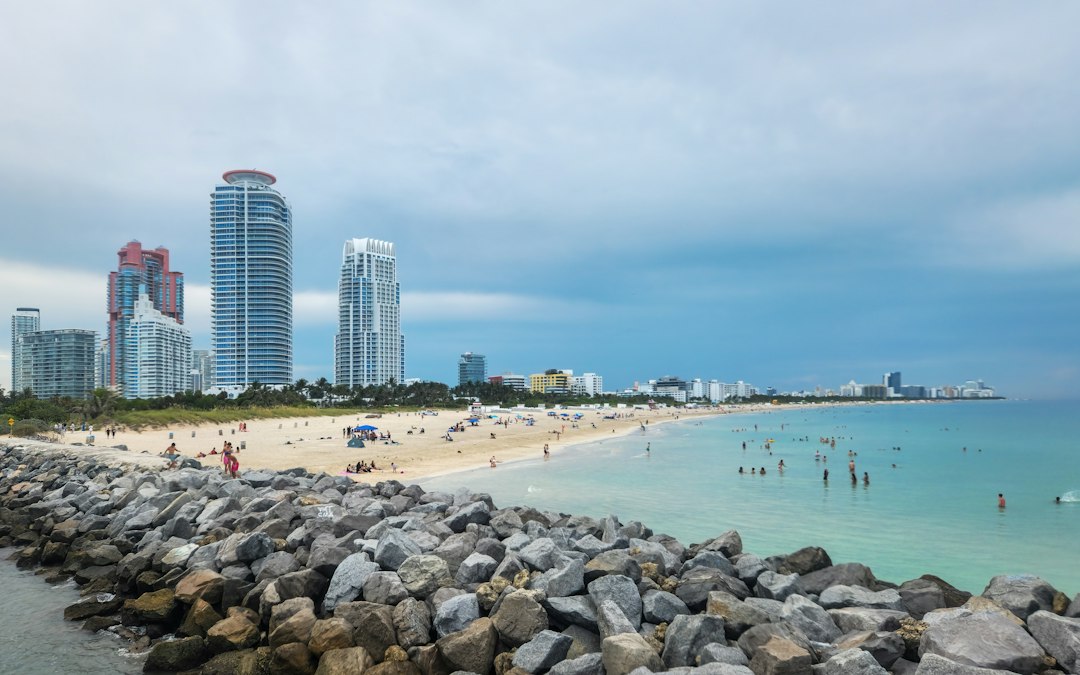
Living in Miami Beach sharpens this, because Miami is not one culture. It’s several, layered on top of each other, often within the same block. A meeting in South Florida can move at Northeast speed or at a pace that feels like the tropics, and the skill is figuring out which one you’re in before you start talking. I’ve written more about what living and working in this part of Florida is actually like, but the short version is that Miami taught me a city is never a single audience.
Food tells you how people negotiate
If you want to understand a place’s business rhythm, watch how it eats.
In cities where meals are long and unhurried, deals tend to be relationship-first. The actual business conversation might not start until the plates are cleared, and pushing it earlier signals that you value the transaction more than the person. In cities where lunch is eaten standing up, the opposite is true — getting to the point fast is a sign of respect for someone else’s time. Neither is better. But confusing the two is how a perfectly good proposal dies for reasons no one ever explains to you.
There’s also the question of who orders, who pays, and whether the host chooses for the table. These small rituals are a live demonstration of how authority and hospitality work locally. In my experience, the person who notices them and adapts gets a second meeting. The person who runs their home playbook everywhere gets polite silence.
Architecture tells you what a place values
Buildings are decisions made permanent. A city with narrow streets and tight blocks was built when walking was the default and land was scarce — and it usually still rewards density, foot traffic and local reputation. A city built around highways and parking lots tells you that convenience won, that scale matters more than proximity, and that customers there expect to be met where they are rather than to come find you.
You can see the same thing at a smaller scale. Older buildings that were renovated instead of replaced suggest a culture with patience and a long memory. Blocks that get torn down and rebuilt every fifteen years suggest an appetite for reinvention — and for risk. Miami Beach has both stories running at the same time: preservation next to construction, buildings that survived and buildings that didn’t.
As an investor, I find that useful. Real estate isn’t only about the numbers in a spreadsheet; it’s about whether a neighborhood’s character is durable or borrowed. I look at how people actually use a street before I get excited about a listing on it. My thinking on how I approach real estate as a private investor is more detailed elsewhere, and I’d add the obvious caveat here: this is my personal perspective, shaped by my own experience, not individualized financial advice for anyone else’s situation.
Why we misread other places
The mistake isn’t ignorance. It’s assuming that the way things are done at home is the neutral, default version of doing business, and that everywhere else is a variation. Every place thinks that about itself. So you get two people across a table, both convinced they’re being straightforward, both reading the other as evasive or pushy.
Running a business teaches you that most breakdowns are communication failures wearing a different costume. I saw this constantly in call-center operations: a script that performed beautifully with one customer segment would fall flat with another, and the temptation was always to blame the list or the rep. Usually the real problem was that we hadn’t bothered to learn who we were talking to. Cities are that lesson at a larger scale. The market isn’t wrong for not responding to your approach. Your approach just wasn’t built for that market.
Practical lessons I try to carry home
- Arrive early and walk. Before a meeting in a new city, give yourself an hour on foot. You’ll learn the pace, the dress, the noise level and the general temperature of the place. That’s context you can’t get from a car window.
- Ask a local one open question. Not “what should I see” — something like what’s changed here in the last five years. People will tell you what the economy is really doing.
- Adjust your speed, not your substance. Adapting to local rhythm isn’t the same as changing your terms or your standards. Be flexible about pace and formality. Be consistent about what you actually offer.
- Write down what surprised you. Surprise is information. It marks the exact spot where your assumptions didn’t match reality — which is the only place real learning happens.
- Bring one idea back and test it small. A service habit, a layout, a way of greeting customers. Try it in one part of the business before you announce it as a new philosophy.
That last point matters more than it sounds. Travel generates a lot of enthusiasm and very little implementation. One thing I’ve learned is that the leaders who get value out of being somewhere new are the ones who convert an observation into a small, testable change. I’ve written separately about how travel changes the way business leaders think, and about keeping business travel and actual rest in balance, because the second one is what makes the first one possible. A trip you spend entirely in conference rooms teaches you almost nothing about where you are.
The broader principle
When you’re responsible for a team, the most expensive assumption you can make is that everyone processes information the way you do. Cities cure you of that, quickly and without argument. You land somewhere, discover that your instincts are calibrated to a different set of rules, and you either adapt or you struggle.
That humility travels well. It shows up in how you train new hires, how you handle a customer who isn’t responding to the standard pitch, how you evaluate an opportunity in a market you don’t know yet. The discipline I try to apply to sales and operations leadership started, in part, as a travel habit: pay attention first, assume less, adjust the delivery, keep the standards.
Miami Beach is the place I come back to, and coming back is its own kind of lesson. You notice things about home after you’ve been away — what works, what you’ve stopped questioning, what a visitor would find strange. That’s the quiet value of going somewhere else. Not escape. Perspective, and the willingness to use it.
Photo by Zoshua Colah on Unsplash